AI in 2036

In January, the Futures Thinking team facilitated two workshops during AI events — one organised by LLInC and one at the Faculty of Humanities at Leiden University. On both occasions, the room was filled with enthusiastic participants eager to engage with the challenging question: what will education or assessment look like in 2036?
The goal was not to provide definitive answers, but to explore together what possible futures might lie ahead — or might be coming toward us — in relation to education and assessment in the year 2036.
The atmosphere was constructive and open. Participants readily engaged with each other, sharing their doubts and enthusiasm, and were willing to step away from daily routines for a moment, letting go of what they know and imagining what could be.
AI Event – January 22: From Ideas to Insights
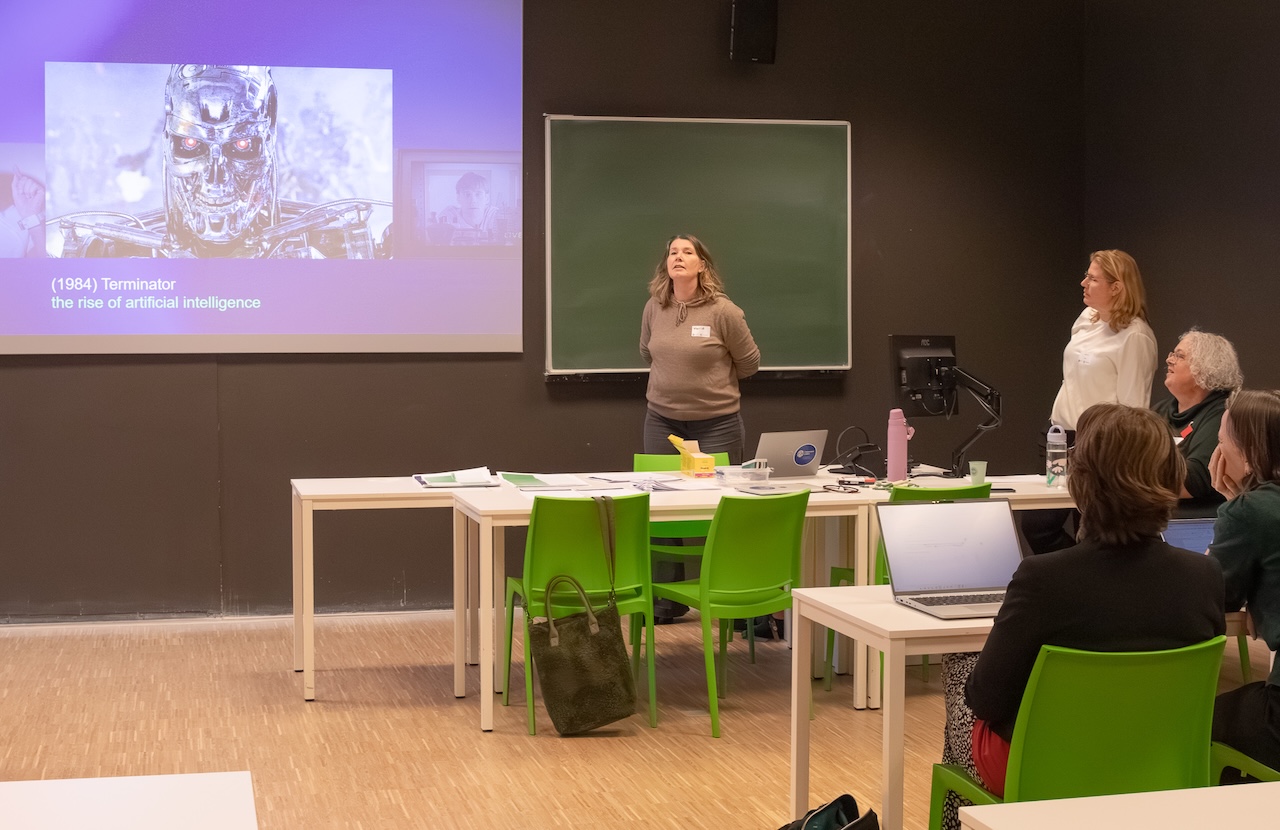
After a brief introduction to the Futures Thinking methodology, we began immediately with the first of two rounds, focusing on openness. Participants were challenged to think as broadly as possible: what opportunities did they see, and what risks might be lurking? There were no right or wrong answers. At this stage the strength was in quantity: the more ideas, the richer the material for the next step.
In round two, we introduced the structure. Participants placed their idea cards from round one in a simple quadrant with two axes: likelihood and impact. Plotting the cards onto this quadrant immediately led to lively discussions. While one participant might view a risk as very probable, another might consider it unlikely. That tension was productive. It revealed assumptions and pushed the group to be more explicit about their expectations and concerns.
Once the cards were on the matrix, emerging patterns became clear. The quadrant with “high likelihood and high impact” commanded priority in the follow‑up conversation. Did these cards describe risks we should mitigate, or opportunities worth strengthening? Through the insightful conversations provoked by the sorting process, the method truly proved its full value.
By the end of the allotted hour, it was evident that the workshop could easily have continued. There remained ample material for reflection. Consider the bright side for assessment and AI: personalised and adaptive learning as well as improved accessibility. Or the darker side: possible biometric identification or technical failures. Topics perhaps for future conversations.
AI Event – January 29: Is this our preferred Future?
We asked Copilot to write a scenario of the Leiden campus in 2036 – a world in which AI plays a major role in preparing and training students, but also one with an increased sense of community, a green and open environment, and a transformed lecturer role which resembles more coach and co‑creator.
Humanities scholars, with their strong textual analysis skills, quickly uncovered the optimistic tone of the scenario and the probable author. GenAI was clearly very pleased with itself. Were the lecturers equally satisfied with this future, and would they in fact prefer it?
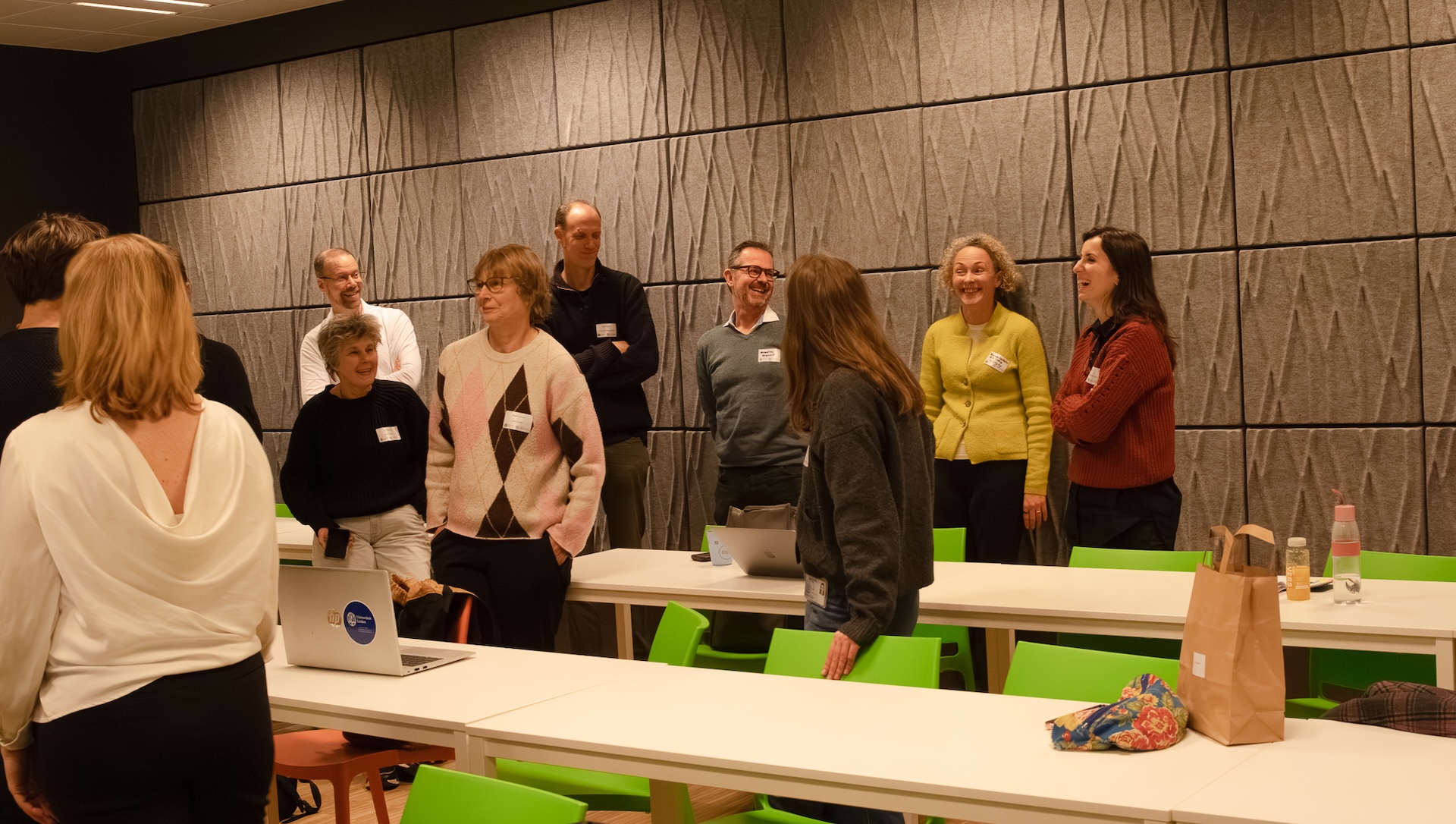
Before sharing with the room, in small groups, lecturers worked through four emotions they felt in response to the proposed scenario: What made them happy? What caused sadness? What sparked anger? What were they excited about in this future? Using sticky notes placed in a quadrant for each emotion, these reflections formed the basis of a constructive conversation.
One participant observed that the AI scenario did not do justice to the diversity of opinions and perspectives within the humanities, opting instead for single truths which made the content feel flat and less useful. Another lecturer noted that they could not imagine remaining in the profession if their role were reduced to playing “second fiddle” to technology. On the other hand, some participants were drawn to the vivid depiction of data‑enhanced learning and could easily picture themselves working in learning zones and silent pods.
Overall, the conclusion was that lecturers should discuss their preferred futures more frequently and clearly with university leadership, especially if decisions lean too heavily toward technological efficiency. Ultimately, participants emphasised the importance of ongoing dialogue about what academic education truly aims to achieve.
Interested in finding out what Futures Thinking could achieve for you? Please feel welcome to a look at our website and contact us at futures@llinc.leidenuniv.nl.